 PIMFA











What is Artificial Intelligence?
A recent Financial Conduct Authority (FCA) discussion paper, DP22/4: Artificial Intelligence, offered the following definition of Artificial Intelligence (AI):
‘It is generally accepted that AI is the simulation of human intelligence by machines, including the use of computer systems, which have the ability to perform tasks that demonstrate learning, decision-making, problem solving, and other tasks which previously required human intelligence. Machine learning is a sub-branch of AI.
AI, a branch of computer science, is complex and evolving in terms of its precise definition. It is broadly seen as part of a spectrum of computational and mathematical methodologies that include innovative data analytics and data modelling techniques.’
- WHAT DO FIRMS NEED TO CONSIDER?
Many PIMFA members are already using AI systems and tools in their everyday operations, and it is likely that the adoption of AI in financial services will increase rapidly over the next few years.
PIMFA firms already use AI tools for several purposes. For example, they analyse large volumes of data quickly, easily, and accurately, which enables their employees to spend more time working with and for their clients.
There are concerns that as AI becomes more advanced, it could introduce new risks, for example:
system develops biases in its decision making
leading firms to make bad decisions
rESULTING IN Poor outcomes for their clients
This is why it is essential that firms deploying AI systems have a suitably robust control framework around their AI components to keep a careful check on what they are doing.
As with any innovation, AI has the potential to make fundamental and far ranging improvements in how firms can serve their clients. However, we must ensure it is continually monitored and checked regularly to manage the risk and maximise the benefit.

- What are regulators doing?
A number of government departments are asking regulators such as the Financial Conduct Authority (FCA), Bank of England (BoE), Information Commissioners Office (ICO) and Competition and Markets Authority (CMA) to publish an update on their strategic approach to AI and the steps they are taking according to the White Paper. The Secretary of State is asking for this update by 30 April 2024.
On 13 March 2024, the EU Parliament approved the EU Artificial Intelligence Act. The EU AI Act sets out a comprehensive legal framework governing AI, establishing EU-wide rules on data quality, transparency, human oversight and accountability. It features some challenging requirements, has a broad extraterritorial effect and potentially huge fines for non-compliance.


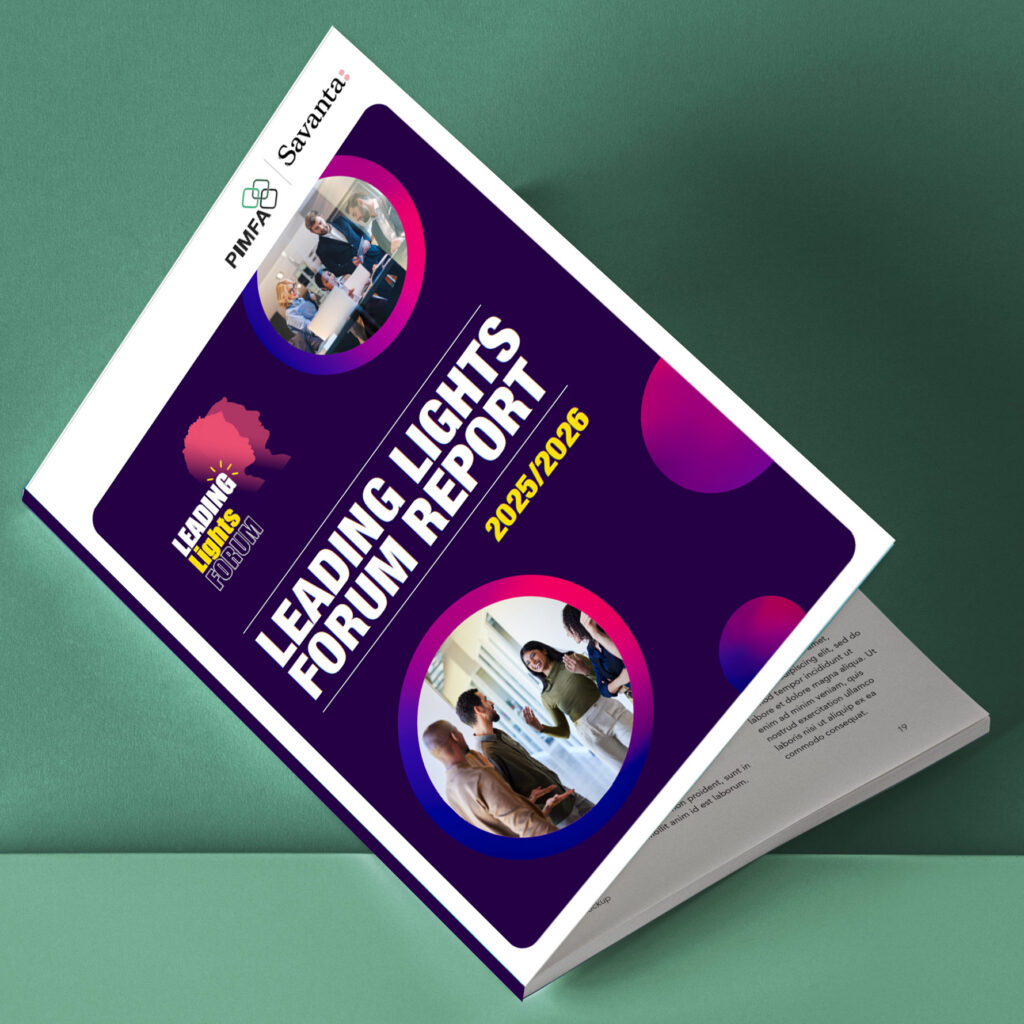
As AI reshapes financial advice, this report, produced as part of our Leading Lights Forum, examines the opportunities, risks, and practical steps firms must consider to achieve lasting success.
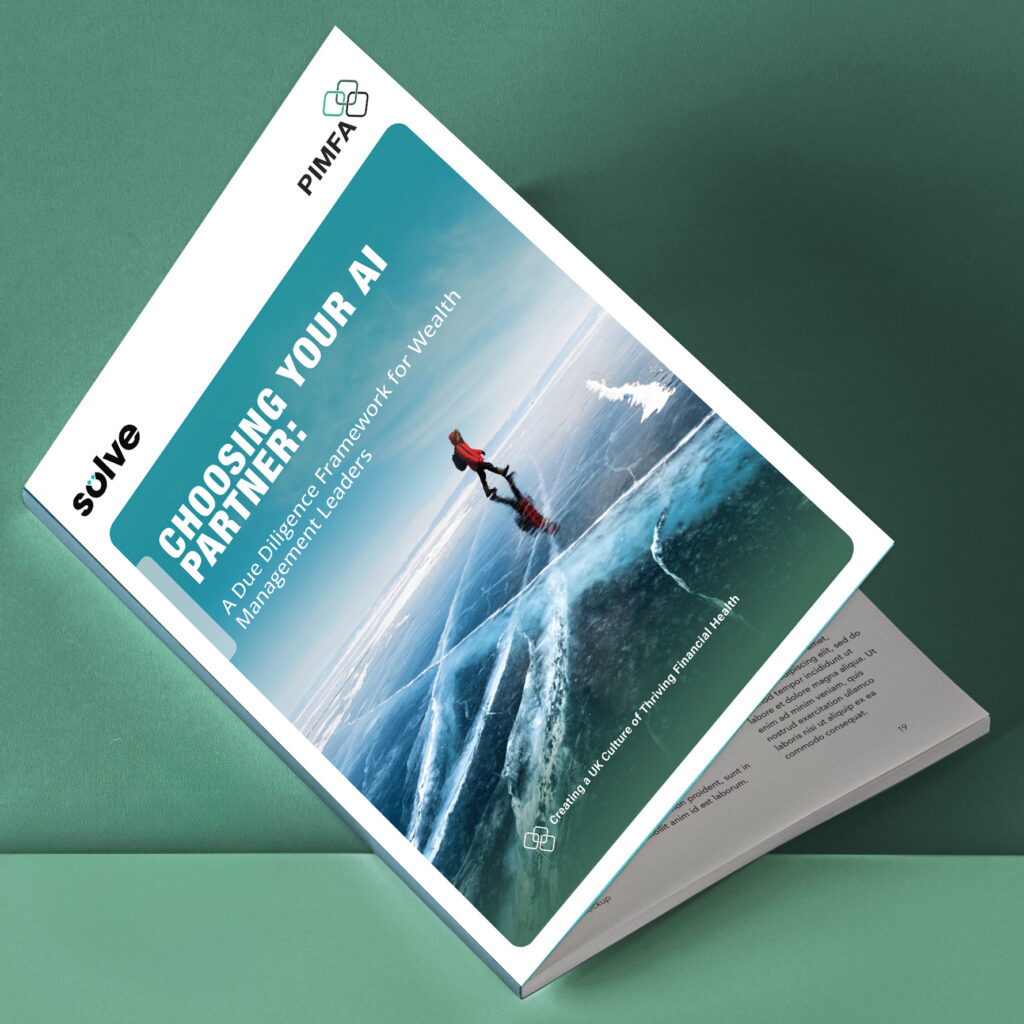
There has been a significant increase in the number of AI providers offering products and services to financial services firms. In response to member feedback, PIMFA has partnered with Solve Partners to develop a practical AI Vendor Due Diligence Guide which provides practical support when evaluating AI vendors.
Read the guide here


latest news
AI in Financial Services: Updates from the FCA
The FCA has published: Good Practice and Areas for Improvement for the use of AI in Financial Services. Speaking at Bloomberg’s UK Policy Series, Jessica Rusu said the aim is to support the “safe and responsible adoption” of AI. The examples create no new rules, but they show how the FCA reads existing ones, including the Consumer Duty, SYSC and SM&CR, for firms that develop, buy or use AI. This guidance is not intended to be static and will be updated as the technology evolves.
What the FCA wants to see
The guidance is organised around three themes:
- Consumer outcomes. Define the consumer need before deploying AI, test outputs with real consumers and consider vulnerability from the start. The poor practice examples include excluding vulnerable consumers by default, overstating what a tool can do and launching automated journeys without sufficient testing. Rusu said AI “should improve consumer outcomes, not simply automate existing processes”
- Governance. Named senior accountability for each use case, independent challenge before deployment and escalation triggers. The FCA flags retrospective governance, which Rusu called “the wrong way around”, and over-reliance on human-in-the-loop controls that become a tick-box exercise
- Operational resilience. Stress-test AI, keep fallback options and avoid dependence on a single model or vendor. The FCA’s examples include a firm that had to redesign a product after a model was retired
Beyond the perimeter
Rusu said four in five less-experienced investors aged 18–40 have used AI to help with investing, and that only 40% of consumers correctly recognise there is no recourse if something goes wrong after acting on a general-purpose tool’s output. The FCA is not expanding its remit in response but going forward, will aim to make the existing boundary clearer. As a policy response, the FCA is calling on AI providers to give clear and consistent disclaimers about the limits of the financial information they generate. It is also embedding six of the Mills Review’s seven recommendations in live work, with a focus on testing and monitoring rather than consultation.
Looking ahead
Rusu flagged agentic AI, where tools act on a consumer’s behalf, as the next area of risk. She said near-miss reporting for significant AI failures is “a regulatory priority”, and that the FCA will work with industry on a “trusted framework” for agentic finance. No date was given. A joint FCA–Bank of England AI survey is due shortly.
For queries, please contact Maria Fritzsche
House of Commons Library – Research Briefing: AI regulation in the UK
The House of Commons Library has published a research briefing which provides an overview of how AI is regulated in the UK.
The paper highlights that AI is regulated in the context in which it is used through existing legal frameworks and sector-specific regulators. This briefing follows the AI Safety paper published earlier this month.
Read the AI regulation briefing here
Future of AI in Professional services in Early Careers and beyond 2026
The webinar examines how AI is reshaping professional services, with a particular focus on roles, skills, career pathways and work design. It considers what this means for early careers, including how entry-level roles may evolve and how learning and development approaches may need to adapt. The session also looks at the implications for the broader workforce, including changing expectations around capability, productivity and new approaches to work design and ways of working. Overall, it provides practical insight into the opportunities and challenges AI presents for both talent and organisations in 2026 and beyond.
Speakers:
Rebecca Jordan, Workforce Transformation Principal & Marsh UK Organisation Design Lead
Sabrina Cunnane, Marsh Workforce Transformation Consultant
FCA Supercharged Sandbox: Cohort 2 Underway
The FCA has published further details of its AI Supercharged Sandbox programme, which provides firms with a secure environment to develop, test and refine AI solutions.
The second cohort includes 21 organisations selected from 199 applications and is focused on supporting responsible AI innovation across financial services. Participants have access to GPU enabled infrastructure, synthetic datasets, enterprise AI tools and expert support, with use cases covering areas such as fraud detection, AI governance, compliance automation and improving access to financial services.
The FCA has also partnered with Anthropic, giving participants access to AI tools including Claude to support experimentation and development.
Read more here.
PIMFA WealthTech AI Tech Sprint
The report from the May 2026 PIMFA WealthTech, Morningstar AI Tech Sprint is now available, bringing together insights and findings from the latest Tech Sprint exploring how AI can deliver measurable business impact across wealth management and financial advice.
The latest Tech Sprint, held in May 2026, brought together nine shortlisted fintech firms to showcase AI-powered solutions designed to answer the problem statement to an industry panel including members from the Advisory Group, Morningstar, Finextra and the PIMFA Team. The problem statement asked “AI in wealth and advice – from experimentation to ROI: how can firms turn their application of AI into measurable business impact.
Read the report here,

Maria Fritzsche
Senior Policy Adviser - Operational Policy, Regulation and Innovation Lead
Click to expand.